The shallow, dark waters of Lake Verret
slapped against the algae-covered wood planks of a narrow walkway outside the family home of Fulton C. “Dub” Felterman, Sr. Roughhewn boards rose above the marshy land providing footpaths for the Felterman’s and the other families living in the cabins at the F.B. Williams Logging Camp. Orange and yellow ribbons of early morning sunlight drifted through the swaying moss of hundred-year-old cypress trees that separated Lake Verret from the nearly impenetrable wetland forest of tall, ashy gray trunks, and branches of long and limber needlelike leaves no wider than a child’s arm.
Sac-a-lait chased out of their hiding places among cypress knees sent ripples of muddy water against the horizontal cypress roots that rose above the waterline. Pesky mosquitoes, already buzzing, searched for victims, hoping to draw blood from the sweaty men who had come to harvest the majestic, water-resistant cypress.
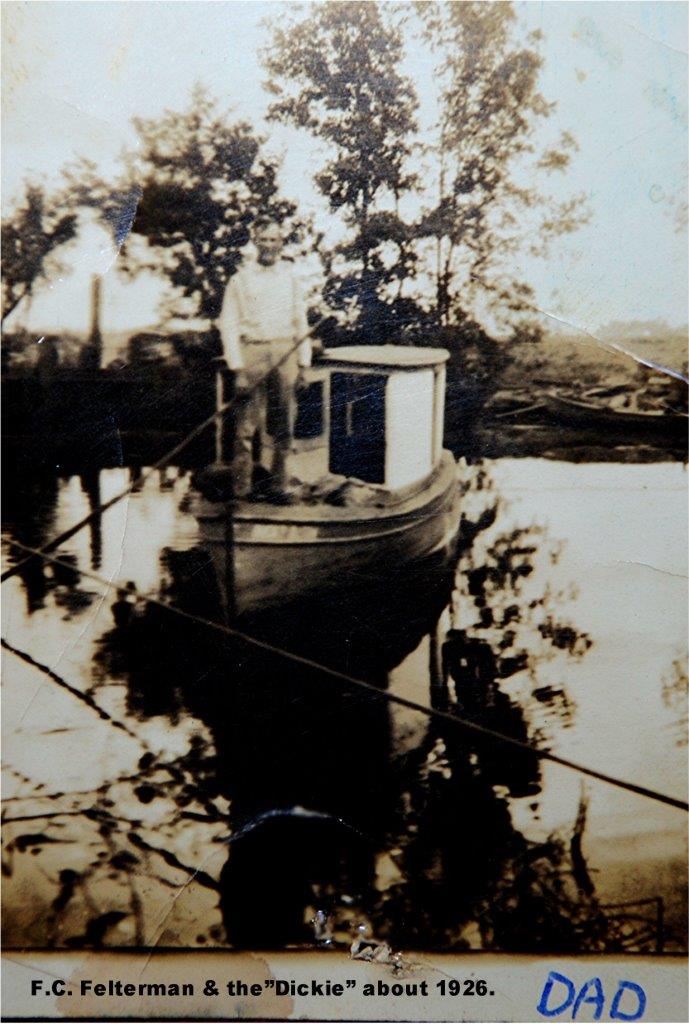
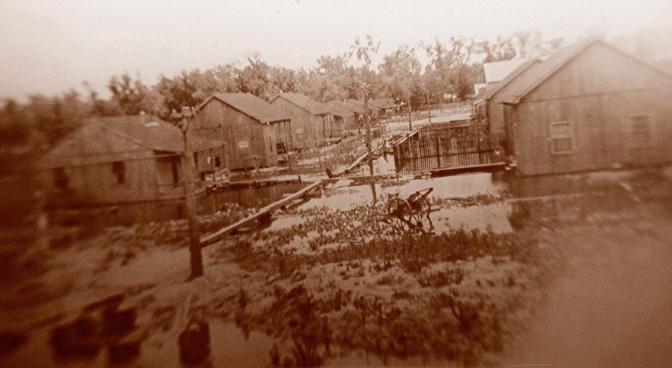
The men who cut logs in the swamp were called swampers. In the 1920’s, swampers created small towns where none existed, temporarily altering the swampy landscape with their machinery, tools, steam winches, logging locomotives, pirogues and steamboats.
Lined up in neat rows, dozens of family cabins, shared the boggy ground with a machine shop, a one-room schoolhouse, a commissary, a blacksmith shop, and other assorted buildings, barges, cranes, and boat docks. These working communities were known as skidder camps and could be found deep within the Atchafalaya Basin. The surrounding plain of the Atchafalaya River was filled with bayous, marshes, muggy bottom land, and small islands. Parading through ancient fishing and hunting grounds once inhabited by Chitimacha Indians, hearty hunters of cypress logs and trees survived harsh conditions in their quest to make a living and feed their families.
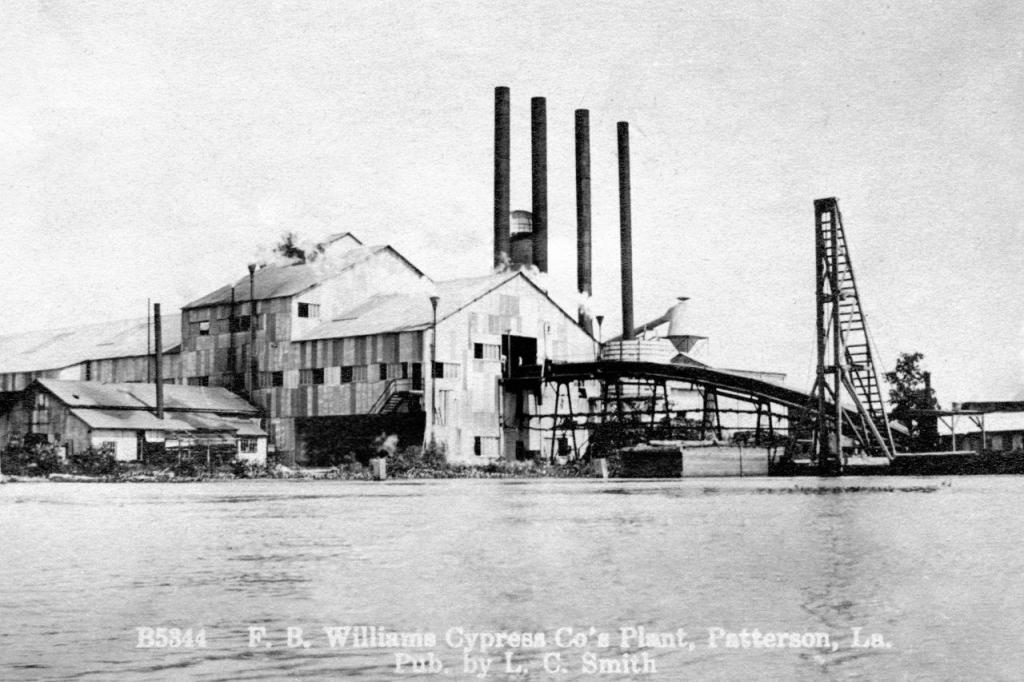
The marshes and swamps of South Louisiana were inhabited and conquered by thousands of men and their families. Steamboats, heavy machinery and trains played a part in conquering the water and land. The heavy cypress logs were hauled out of the swamp by train to open canals to Lake Verret. The logs were made into rafts connected by logging chain dogs, then hauled to the company mill by the steamboat Sewanee. Men like Patterson, La., native F.C. Felterman, Sr., were needed to repair these chugging and steaming tools of the lumbering trade. As these transient towns and people moved to the next harvest, left behind were millions of acres of cypress stumps and pull boat runs throughout the Atchafalaya basin. Many of these men, like Felterman, worked for the F.B. Williams Cypress Co., based in Patterson.
The labor of these early twentieth century lumberjacks provided cypress to construct houses, make wood shingles, create board roads, build Pullman railway cars and much more, not only in Louisiana but throughout the United States. These once dense forests were chewed up and this once prosperous industry came to a grinding, if not slow, halt in 1928 when the cypress ran out. The F.B. Williams Cypress Mill in Patterson cut its final board in 1934.
Master craftsman and mechanic Fulton Felterman, Sr., his wife Una Blanchard Felterman and their children, left the shores of Lake Verret for the growing town of Patterson and a small home near the Lower Atchafalaya River. The year was 1928. Fulton C. “Butch” Felterman, Jr., was a year old.
Communities like Patterson, La., were hit with a double catastrophe in the early 1930’s when the leading industry closed, and the stock market crashed sending the country into a Great Depression. Fortunately, another small but growing industry found a home in Patterson.
Born October 6, 1889, in Patterson, La., Harry P. Williams was instrumental in shaping the economy of the small town where he called home. At the time of his death in his early 40’s, Williams was recognized as a leader in three lines of industry: aviation, lumber and sugar. Each industry created jobs for the people of Patterson and other nearby communities.
Williams owned or had vested interests in a variety of industries—a sugar plantation a few miles north of Patterson in Calumet, president of one of the banks in Paterson, head of a south Louisiana motor company, and head of an oil company that controlled vast fields of treasure that would lead to the development of another Louisiana industry in a few short years. And, among other things, he was, for one four-year term, mayor of his beloved, native town.
His interest in aviation came while serving in his role of town mayor. One of the New Orleans newspapers had organized an “aircade”, composed of a dozen or so airplanes in which city and state officials made a tour of towns in Louisiana and Mississippi. The chief pilot of the aircade was a barnstormer from Texas who was working out of New Orleans. As the mayor, Williams was the official greeter for this convoy of planes and officials that landed in Patterson.
As a courtesy, chief pilot Jimmy Wedell invited Mayor Williams to take a short flight to observe Patterson from the air. Before the day was over, Williams and Wedell had brokered a deal for Williams to purchase a sister-ship of the one in which Charles Lindberg had made his flight to Paris earlier that same year, on the condition that Wedell would teach Williams how to fly.
Within the month, land on one of Williams’ sugar plantations was cleared for the Patterson Airport. By the following spring, Jimmy Wedell and Harry Williams were partners, forming the Wedell-Williams Air Service, originally for the sole purpose of providing charter trips to New Orleans, Grand Isle and other surrounding areas in south Louisiana. The business grew quickly and soon they were making weekly flights between New Orleans and St. Louis, daily trips between New Orleans and Shreveport and eventually a daily round trip between New Orleans and Dallas-Fort Worth.
Eventually Wedell suggested to Williams they should build two small racing planes for their personal use. As this new business grew, more planes were purchased or built and by the end of 1930, Wedell-Williams Air Service owned forty airplanes. The most lucrative part of the company was building racers at their base in Patterson. By 1931, Williams-Wedell racers were finishing in the top money slots in national air racing competitions. The business of designing and building these airplanes created jobs for many Patterson residents, including men who had once worked for Williams at the Williams Cypress Mill or pulling shifts in the nearby swamps harvesting the giant timber.
It was at the Patterson Airport that Fulton Felterman, Sr. began another career, one where he was recognized for his superb craftsmanship and attention to detail. Felterman built wing panels and spars or ribs for the racers. In a fixed-wing aircraft, the spar is often the main structural member of the wing, running spanwise at right angles to the fuselage. The spar carries flight loads and weight of the wings while on the ground. Fulton Felterman constructed spars from six layers of laminated wood, stronger than solid wood of the same dimensions.
While the senior Felterman was building ships that took to the skies, his young son would soon have a first-hand view of the next industry to begin and flourish along the banks of the Lower Atchafalaya River, one powered by another type of ship, one that created waves and floated on water.
On June 25, 1934, Jimmy Wedell was killed in an airplane crash. On May 19, 1936, Harry P. Williams was also killed in an airplane crash. Before the year ended, Williams’ wife, Marguerite Clark Williams, a former silent movie actress, sold the air service to Eastern Airlines and later moved from Patterson to New York City.
By 1937, the economy of Patterson was on life-support with two of its biggest industries gone. Sugar Cane farming and several small businesses in Patterson were the lifeblood of the small community. But without something on the horizon, the heart pumping the lifeblood would soon die as well.
That same year, something did appear, not on the horizon but on the Lower Atchafalaya River. With his fleet of shrimp trawlers, Felice Golino, an Italian born fisherman living in St. Augustine, Florida steamed up the Lower Atchafalaya and docked along the dilapidated wharfs in Patterson. Following a rumor that shrimp were plentiful along the Louisiana coastline, Golino wanted to set up his operation in Patterson. Golino established the town’s first shrimp company, and his fleet of trawlers grew to meet the demand for larger, powerful boats needed to fish the deeper waters of the Gulf of Mexico.
In 1938, ten-year-old Fulton C. “Butch” Felterman, Jr., was witness to an exciting event that was taking place across the street from his home on Depot and Main Streets in Patterson. The town’s second shrimp company was being built and the project, from start to finish, was keenly followed by the young Felterman boy. Whenever his Mama gave him permission to cross Main Street, he would take his dog Spot and view the construction up close. It didn’t take long for the 10-year-old boy to know everyone involved in the construction of the fish house.
Soon, the construction ended. One afternoon, an air whistle that was attached to an iron pole that rose about 10 feet above the roof of the building, sounded loud and steady. Butch and Spot hurried across the street where they found large green and white shrimp boats tied to the wharf. The shrimp boat names were Fighter and Arizona.
Mesmerized by the arrival of the two boats and their masts and booms, nets and ropes, activity in and around the fish house grew as strong men started unloading the boats using large, wire baskets filled with shrimp. The shrimp were emptied on the picking tables inside the fish house where ‘pickers’ would remove the shrimp heads, peel and de-vein the shrimp, and then drop them in a bucket. For their hard work, the pickers were paid 5 cents for each bucket they filled.
In due time, young Butch was hanging around the fish house every day after school. He knew the boat captains and their crews, heard their stories, listened to their jokes. A hunger to one day captain his own boat grew in the pit of his stomach. It wouldn’t be long.
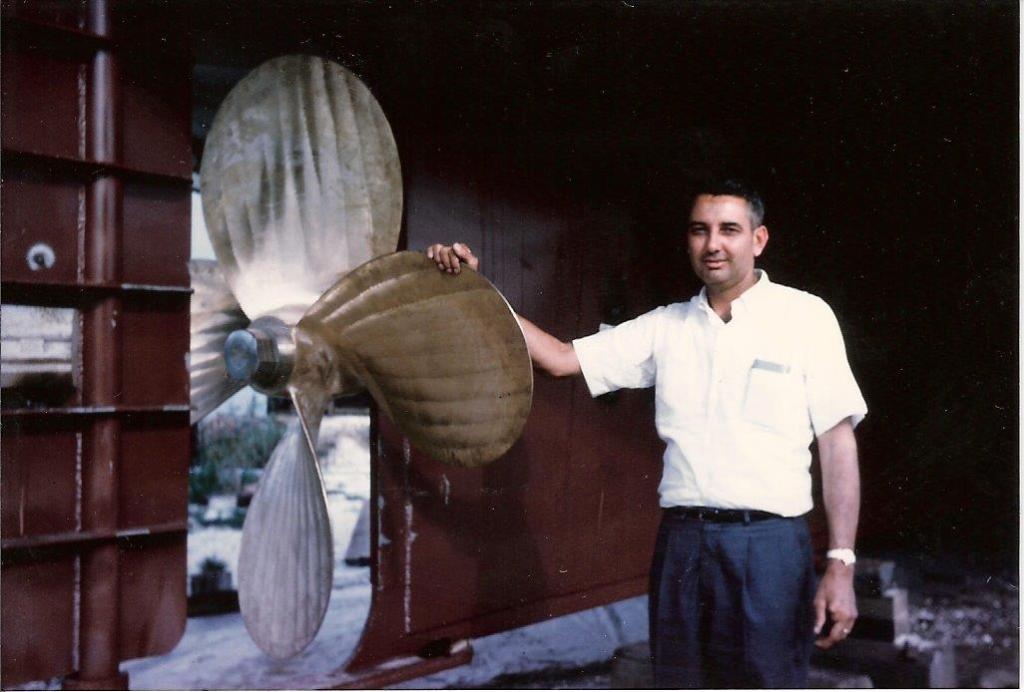
Late 1941, Fulton Sr., the proud owner of his own boat, Emanuel V II and his Captain, Eph Bordenmiller, were working on the shaft and propeller while the boat was dry-docked at Watson Shipyard in Patterson. Captain Eph told Butch about a brand-new battery powered radio he had purchased at Hoe Breaker Landry’s Store. Eager to see the new radio, Butch climbed aboard the boat, found the device on Captain Eph’s bunk, turned it on and began turning the dial searching for radio stations. He was shocked at what he heard on every station he tuned to. The Japanese had attacked the United States at Pearl Harbor in Hawaii. He told his father and Captain Eph what he had heard. All three were filled with shock and disbelief. Soon, everyone would learn of this horrendous act against America.
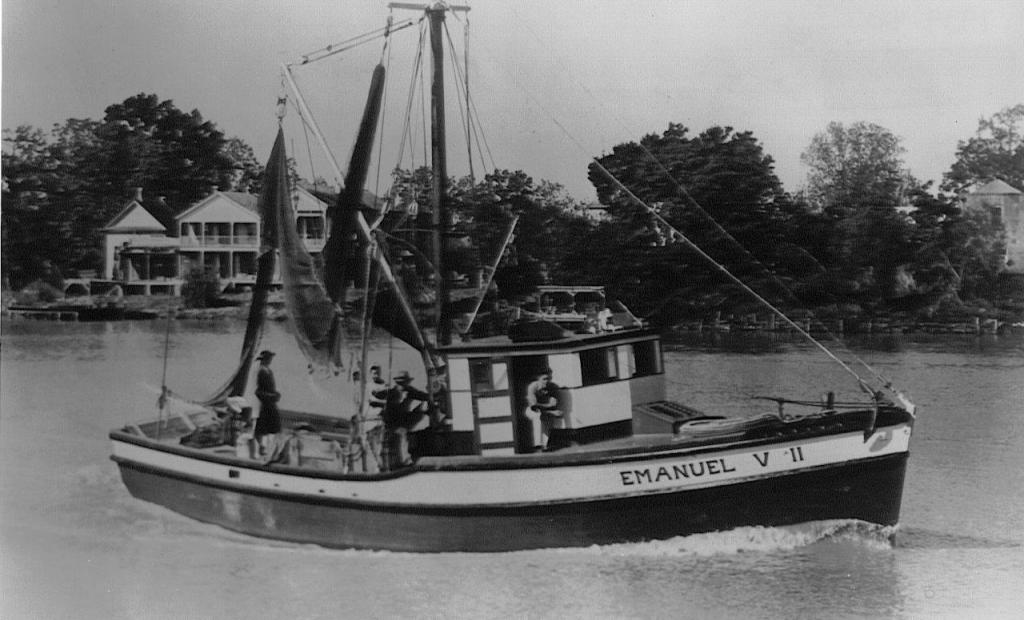
During the summer of 1942, Butch took his vacation on his father’s boat, working as a member of the crew in the Gulf of Mexico. With the United States fighting in World War II, German U-Boats were popping up in the gulf along the Louisiana coastline, sinking more and more cargo ships.
Shrimpers would anchor in shallow waters at night to avoid the torpedoes. With the windows of the boats painted over, the effect caused a black out of sorts, another precaution to avoid being spotted by the German subs.
One morning, the captain woke Butch and pointed to a fire on the distant horizon. “Another ship had been torpedoed, was on fire and sinking into the deep waters of the Gulf,” the captain sadly said.
The rest of the trip was without incident and the boat and crew safely returned to Patterson. Still, throughout the war, the gulf was not a safe place for cargo vessels, shrimpers and fishermen. The following year, Butch’s younger brother, Ernest, took his first shrimping trip and witnessed first-hand the devastation when the captain pulled up near a ship that had been torpedoed and left to rust and fall apart in the offshore waters.
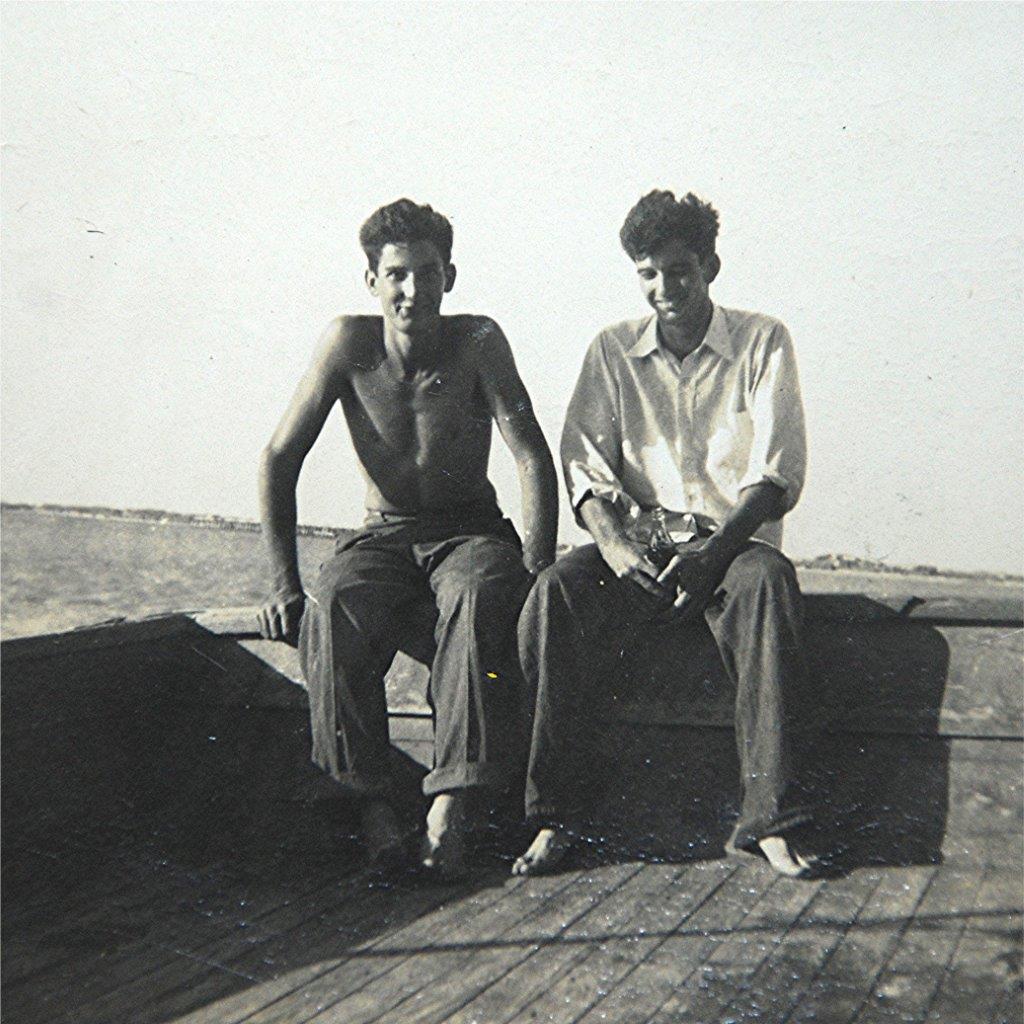
Throughout high school, Butch would often work aboard shrimp boats learning how to handle nets, make repairs, and operate machinery. After high school, Butch joined the Army Corps of Engineers and served his country during the war. When the war ended, he returned to his hometown and began looking for work. It didn’t take long before Butch was offered a job aboard the shrimp trawler, Papa Joe, owned by Patterson fleet owner, John Santos. Shortly after, Felterman’s skills were recognized by another fleet owner, Bright Kornegay. Butch was given his first opportunity to take command of the trawler Bill Kornegay. Together with his brother Ernest, and a greenhorn deckhand, the three men sailed offshore for the first of many shrimping adventures.
Over the years and into the 1950’s, Butch Felterman bought his own boats and grew his fleet. A respected boat captain and business owner, Butch was a leader in the shrimping industry and was well-known on the docks and fish houses from Patterson to Morgan City. The life of a shrimp boat captain is not an easy life to begin with—the ups and downs of finding and catching shrimp, unpredictable weather, boat repairs, finding reliable and strong crews—it’s understandable why many don’t stay in the industry a long time. For both Butch and Ernest, their love of shrimping, being on a trawler in the open waters of the Gulf, being their own boss, helped keep both men on deck and in the pilot house for many years.
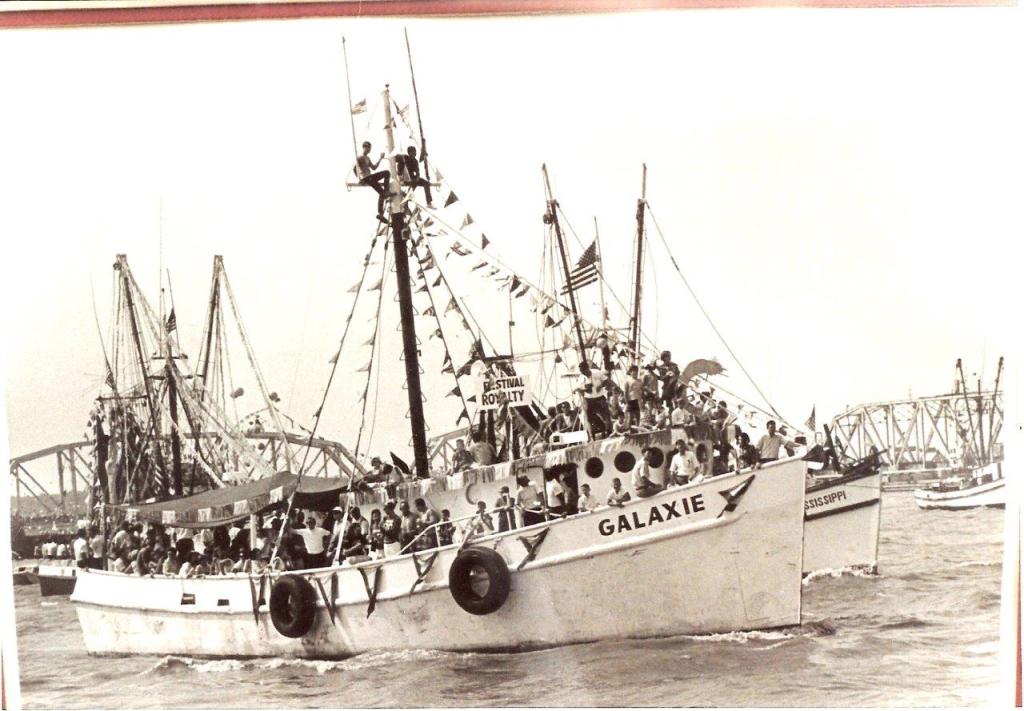
As Butch’s reputation grew, so did the sizes of his catch. In 1958, Butch was named the King of the Fleet, also known as a ‘highliner’, for having caught the most shrimp during the previous year. In the mid-1960s, Butch contracted the construction of a 72’ steel hull in nearby Raceland. When the hull was finished, the boat was towed back to Patterson where Butch installed the engine, rigging and pilothouse. The boat was named Galaxie and set off on its maiden voyage. Upon its return to Patterson and after completing just one fishing trip, Butch received an offer from Geophysical Services to charter Galaxie to perform geophysical surveys in the Gulf of Mexico.
With steady paychecks from the booming oil business, the Felterman’s divested themselves from shrimp boats and constructed oilfield supply boats and started Galaxie Marine Service, Inc. Into the 1990s, this thriving company had grown to a fleet of 25 boats, all over 100’ long. In 1997, Galaxie Marine Service, Inc., was sold by stockholders Butch, his brother Ernest, and their sons Danny, Lee, and Michael.
Nearly three years ago, I was able to sit down with Mr. Butch and hear some of these stories first-hand. His daughter, Lisa Kornegay and son-in-law, Brightman, were gracious hosts and arranged a visit while I was in town from Kansas. Nearly every adult who reminisces about their childhood will talk about opportunities missed. Perhaps nostalgia creeps in and we long for a chance to revisit a memory, ask questions of someone who feels the same about a time and place. Just like Mr. Felterman, I love my childhood home of Patterson, La. Every story I hear fuels my desire to deepen my knowledge about its past. The more I learn, the more I want to share with others.
After I graduated high school in 1982, I moved away from Patterson. After nearly 40 years of living in other places, Patterson and St. Mary Parish still have a powerful hold on me. I reminisce and think of all the people I wish I had spoken to, learned first-hand their stories, their influence on the place of my formative years.
Mr. Felterman invited me to visit with him in his lighthouse/museum that sits on the edge of the Lower Atchafalaya River adjacent to a warehouse that has hosted many family and community events over the decades. Where the lighthouse presently stands, was a fish house that was destroyed by Hurricane Andrew in 1992. That fish house originally belonged to Captain John Santos Carinhas. When he moved, his brother, Jack Carinhas, took over the operation. Jack eventually gave up the property and moved to Brownsville, TX. From there, Butch started Felterman Fabricators where he constructed trawl boards and made marine repairs. Later, the property became the original location of Galaxie Marine Service, Inc., and the sight where Butch finished construction on the 72′ shrimp trawler Galaxie.
I knew our time was limited but I could barely contain my excitement and awe at the collection of old photographs and fishing and shrimping artifacts that Mr. Butch collected over the years. Each picture, each artifact, told a story and there is no better person to tell these stories than Mr. Butch Felterman.
Because I was so fascinated listening to the history of my small town’s place in the shrimping and logging and aviation industries, I did not hit the correct buttons on my digital recorder and sadly our conversation was not recorded. Through my own notes and previous published stories given to me by Lisa, I was able to later write and share some of the history that was lived and made by Mr. Butch, his brother Ernest and others connected to him by blood and through their bonds of friendship.
After my visit on that beautiful afternoon in October, several thoughts occurred to me. All around me were stories that needed to be told and shared. I admit that much of what is written here has already been told, but the opportunity for someone else to hear these stories should never be missed. Hence my desire to publish this story on Pinball and Preachers.
As I reflected more about my visit and spending a couple of days in the town of my childhood, I realized that many of my experiences growing up in Patterson, in some way or another, could go back to Mr. Felterman and his family. I’m sure I’m not alone when I say that. Here are just a few.
I can think back to my years playing Dixie Youth baseball and year after year, Galaxie Marine consistently sponsored a team. Just like my team, Knights of Columbus, boys in Patterson were able to play baseball without parents having to shell out their own hard-earned money thanks to sponsors like Galaxie Marine.
In 1970 I attended my very first air show at the Patterson airport. My second airshow was in 1972, which sadly, would be the last airshow in town. I know that Mr. Butch and Mr. Ernest played an integral part in securing these shows to the area.
My first exposure to the history of the cypress industry was playing on the huge cement ruins of the Williams Cypress Mill off Bridge Road. It was wooded back then and there were trails circling the ruins and as kids we felt like we were on top of the world after climbing to the top of these structures. Later, thanks to the Felterman family, and of course many others, a museum was built that was dedicated to the cypress and aviation industries located in Patterson at the turn of the 20th Century.
For such a small town in South Louisiana, Patterson has produced many pioneers, visionaries, leaders and its own share of heroes who have given much to make this community a special place.
Mr. Butch, your love for Patterson and the Lower Atchafalaya River can be seen in what you have done personally with a lifetime of giving and sharing. Your impact on our beloved community will live on for generations and generations. Thank you.
Author’s note: A special thank you to Lisa Felterman Kornegay and Danny Felterman for their help with this story and for sharing family photos. In addition, some background and historical data for this story was previously published by Brendan Burke, “Life on the Beautiful Lower Atchafalaya,” in November 2016; “From Shrimping to the Oil Industry, Felterman Brothers Learned Ropes,” by Gary Falanga in The Daily Review, August 19, 1986; “Wedell-Williams Air Service,” by Robert S. Hirsch and Barbara H. Schultz. A special thank you to Mr. Parker Fulton Felterman, grandson to Mr. Butch Felterman for an article he and his grandfather wrote in 2009, “A Fish House Comes to Town.”

 Pinball & Preachers
Steve, another great story. I enjoy all of your writing. Tim Smith
LikeLike
Tim, thank you for reading and letting me know when you enjoy one of my stories.
LikeLike
Thank you, Steve, for another good story.
Patterson will always be home to me, Though born far away I connected somehow, and always enjoy bringing my wife there. (Well, soon to be wife, as soon as we get to San Diego and have a friend marry us.)
I continue to look forward to your next story, and my next trip to Patterson. I am only a few hours away.
LikeLike
Congratulations on your upcoming marriage. I too, know Patterson will always be home. I appreciate your kind words.
LikeLike
Great history of Patterson and Butch Felterman. This is what our children should be learning in Louisiana History classes.
LikeLike
Clara, Thank you for reading. I agree with you about what our children should be learning.
LikeLike
This was a most enjoyable and educational story. Thanks for sharing. I may have moved from Patterson, but my heart still remains.
LikeLiked by 1 person
I’m so happy you enjoyed it. Thank you!
LikeLike
Loved reading this article! It brought back many memories of the years I lived in Patterson. I was born there in 1945, grew up there in the 50s and early 60s, and raised my kids there in the 70s and 80s. I left in 1992 and moved to Lafayette, where I still live. Thanks for writing this!
LikeLiked by 1 person
Thank you Faye for reading and enjoying this story!
LikeLike
Great article Steve!
LikeLiked by 1 person
Thank you so much!
LikeLike
Wonderful story Steve. I forwarded it to all my siblings. In certain they will enjoy it as much as I did.
Terry Cope
LikeLiked by 1 person
Terry, thank you for reading and sharing with others.
LikeLike
Loved seeing our history like this. Daddy would tell us many stories of this time and this story brings back a lot of this history. I can see this history in my mind. Thank you
LikeLiked by 1 person
Becky, thank you for reading and sending your comments.
LikeLike
Great Read ! My grandfather was a shrimper in Patterson I the 40’s and 50’s
LikeLike