High above the west bank of the Missouri River in Atchison, Kansas, I strolled slowly down the red brick street, stopping briefly to view the white wood-frame, Gothic Revival Cottage that sits neatly, passively, reverently, at 223 North Terrace. As I view the architecture of this solidly-built late 19th Century home, the front door flies open and a young girl of perhaps 10 or 11 races through, takes two steps on the porch and then springs from the one step landing and without hesitation runs through the front lawn, across the street without looking for approaching cars and doesn’t stop until she is at the edge of the bluff that overlooks the quickly moving, muddy waters of the Missouri River.
The door of the home opens again and an elderly woman looks out, spots the young girl who has just run past me to look at the river and placing her hand over her eyes to shield them from the rising sun in the east, beckons the blonde-haired girl to come back in the house.
“But Grandmother, the riverboat is coming, the riverboat is coming. I heard the calliope from my bedroom,” the vivacious girl yells back over her shoulder to her grandmother.
“You mind your manners Amelia and don’t you be running down that hill toward that River,” the woman says, wiping her hands on her apron that is snug against her long cotton dress. She turns and heads back into the house and I hear the screen door of the house slam against its frame. I turn back toward the young girl hoping she has in fact listened to her grandmother and is staying on the grassy area above the tree line and has not wondered toward the rushing current below.
Obediently, but not without scuffing her feet on the bricks of the narrow street and taking several wistful glances over her shoulder at the river, the girl walks through the clipped grass in front of the house and makes her way to the porch before fading into the unopened door as I stare absently at what is happening before my eyes.
“Baby, what are you staring at? Steve, Steve,” I hear my wife, Nancy, call to me and the images rush through my mind and disappear as I turn toward her voice, unsure if what I had just seen was real or just in my mind.
I dare not say anything about my Walter Mitty moment and say, “Sorry baby, I was just imagining what it must have been like for young Amelia Earhart growing up here,” as I realized this view is the same view she would have encountered 100 years ago, when she walked these same bricks and bluffs. Nancy gives me a peculiar look, starts to say something but knows it is useless to comment as she recognizes that nostalgic, reflective look she has seen many times.

The view is from the home of Amelia Earhart’s grandparent’s home but also Amelia’s birthplace in 1897. My wife and I are standing outside the home, stretching and admiring the view after taking a morning ride on our Indian motorcycle on a beautiful Fall morning. Images of Amelia Earhart, her triumphs as an aviation pioneer, her quest to fly around the world, the era when she conquered the skies, take me back to my own early years, to a town that in its own way, was part of this same golden age of flight, of exploration, of men and women bravely moving our country into the 20th century. The spirit of Patterson is inside of me just like it was in the hearts and souls of Jimmy Wedell, Harry P. Williams and others who at one time or another, called Patterson, Louisiana home.
My dad said he had a surprise for me as we jumped into his old Volkswagen Bug that was parked on the side of First Baptist Church of Patterson. He and I had been cleaning up on this Saturday, doing what we could to get the church ready for Sunday services the next morning. I was 8 years old and I tried as much as I could to squeeze in time to be with my dad, no matter what he was doing. Daddy turned left out of the church parking lot and headed west on Main Street. I thought we would turn right on Bridge Road and cross the Bayou Teche. However, we passed that turn off and kept driving. Before long we were outside of town, passing the sugar cane fields owned by the Cremaldi family and making our way toward the airport. At least that was the direction we were heading as my dad still had not told me what the surprise was or where we were heading.
As the car slowed and my dad downshifted the VW, I tried to sit up on my legs so I could get a better view. He turned on his left blinker and started braking as we got closer to the road that turned toward the Patterson Airport. We drove past metal buildings and in the gaps I could see a variety of airplanes sitting neatly on the concrete tarmac. Most of the planes had ropes tied to the wings and then looped through iron hooks deeply cemented into the pavement below. Wood chocks were pressed against the wheels of the small planes, sentries steadfastly grounding the metal birds of flight. I looked up and saw the light tower, it’s green and white beacons unlit, standing ready and waiting for darkness.
My heart swelled the closer we got to the airplanes and the large metal hangars where the aircraft were stored during inclement weather. I loved coming to the airport to watch the planes take off and land, something my dad and I would often do.
“Hey Dad, look, there’s Mr. Jackson standing by his airplane,” I eagerly exclaimed.
“Well, what do you know,” Dad said, with a knowing look on his face.
A few times prior to this day, my Mom and I had driven Dad to the airport so he could meet Mr. Jerry Jackson, the owner of Jackson’s TV and Appliance in town, who attended church with us and more importantly, had his pilot’s license and owned a 4 seater Cessna.

“Here’s your surprise,” Daddy said as he pulled into a parking spot in front of the hangar located closest to Mr. Jerry’s plane. I think I was out of the door before the car came to a complete stop. I ran up to the plane and stood close to Mr. Jackson as my dad caught up with me and like he had said many times, “Hold your horses, bud.”
Dad and Mr. Jerry shook hands, made small talk while they inspected the plane and untied the thick rope that was attached to the wings. Mr. Jerry asked if I was strong enough to pull the chocks away from the wheels and without answering I scampered under each wing and drug the wood blocks across the concrete until they were safely stacked away from the airplane. My dad opened the passenger side door and pulled the seat forward so I could climb into the back seat.
I was told to buckle up and get ready to fly. And fly we did.
As the wheels left the runway, we circled the airport then banked over the bayou, staying low over the sugar cane fields. Wide-eyed and bouncing on the back seat, I kept fogging up the window as my mouth and nose constantly pushed up against it. Cumulus clouds raced by, the world below growing smaller and smaller as the tiny plane continued to climb.
From the rear seat I could see the bridge that crossed over Bayou Teche not far from the former site of the Patterson Cypress Mill. Back in the 1920’s, this mill, owned by Harry P. Williams, was the largest cypress mill anywhere in the world. With lumberjacks harvesting the ancient cypress trees that populated southern Louisiana, the industry spurred a boon to the local economy and caused the tiny town of Patterson to grow and prosper.
The drone of the Cessna’s engine and the loud conversation between Jerry and my dad combined to form a steady buzz like the sound of hundreds of bees circling a tasty hive. Eventually the noise of the plane and the words shouted back and forth from the front two seats of the plane faded and I was in my own world. In the distance I saw another plane seemingly on a collision course with the Cessna. I didn’t want to say anything because I was really just watching a black dot move toward us and how was I to know how close the plane was and if it really was flying at the same altitude. I remained silent and watched. The other plane continued toward us. I watched. My heart beat faster. I looked at the other plane and then toward the cockpit of the Cessna. Daddy and Jerry were oblivious or maybe just not concerned about the approaching aircraft.
My breath caused the window to begin fogging up again. I used my small hand to wipe the moisture away from the window. The plane continued on its current path. What do I do? Before I could answer or utter a single word, the plane banked away from the Cessna and climbed to a higher elevation before getting lost in the afternoon sun that temporarily blinded me as I scanned the horizon for glimpses of the ominous aircraft.
I heard the deep roar of the engine, the rumble of flying horsepower before I saw the plane again. Like a sprinter who finds himself behind the other runners but slowly inches forward to match their pace ,ultimately passing everyone in an all-sprint to the finish line, so did the sleek craft as it edged alongside us before the pilot pushed the throttle forward causing the plane to rush ahead only to hibernate within the clouds and upper air masses that floated above the swamps and sugar cane fields below.
“Wow,” I yelled. “Did you see how fast that plane was going?”
Not a word from the front. Not a change in conversation. Neither man looked out the side window where I had seen the plane race by.
“Dad, the plane, did you see the other plane?” I yelled a little louder thinking he had not heard me the first time.
Turning around and giving me a questioning look my dad said, “What plane? I didn’t see another plane.”
I slunk down into the rear seat thinking I must have imagined seeing another plane. I found the courage to look out the window again and right beside us, the same plane. It was beautiful and somehow, I recognized it.The plane was from another era and reminded me of a plane I had seen in a little red book about the history of Patterson that had been written by a Patterson Junior High School 8th grade history class back in 1965. My parents had a copy of the book on one of the bookshelves at home and I had read the book over and over after I had learned to read. I was fascinated about the events of our small town and the role it played in the history of aviation and cypress mills during the early part of the 20th century.
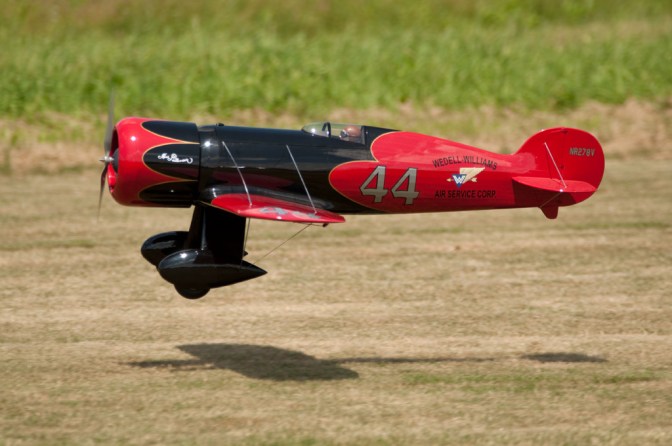
Painted a bright black and red with a white number 44 burnished on the side of the fuselage, the plane looked just like the plane built by Wedell-Williams, the “Model 44” a sleek monoplane with fixed landing gear. From the open cockpit, the pilot waved to me. I timidly returned his wave. He wore goggles and a leather fitted cap that covered his entire head like one of the old football helmets players wore before there were such things as chin straps and face masks. The Pratt and Whitney Wasp Jr. engine gleamed and roared and the propeller appeared to be rotating backwards as I watched the blades cut through the air. I was mesmerized.
I again turned away, just for a moment to tell my Dad to look out the window at the old airplane but as I did, I saw the runway of the Patterson airport rushing up to meet us. We were merely a few feet away from the concrete and I could hear the engine winding down just as the conversation between my dad and Jerry Jackson returned to normal tones. I started to say something about the plane that I had seen earlier but I was quickly feeling like I had merely dreamed the event.
A few days later, I rode with my Dad to Rentrop’s Shell Station on Main Street. Long before the convenient stations appeared along Highway 90, Rentrop’s Shell had been a permanent fixture in Patterson. Back then, everything was full service and the option of pumping gas on your own was unavailable. It seems so foreign to most of us now, but there was a day when you pulled up to the gas pump and an employee would come out of the station and greet the driver. My Dad or Mom would roll their window down and by name would be greeted by the attendant. When asked, my parents would respond with regular or premium to signify the grade of gasoline they wanted pumped into their Chevrolet.
“Pop the hood for me Mr. Achord,” the employee would say and once the hood was popped and secured, the oil would be checked, the other fluids checked and a cursory inspection of belts also made. Sometimes my Dad’s car would be a ‘quart low’ on oil, as the attendant would explain and my Dad would usually want the oil added unless he was due for an oil change soon. A check of the air pressure in the tires would be made and of course, the windows cleaned and away we would go.
On this particular Saturday, my Dad had driven to the service station so he could get his Chevrolet Impala serviced. Serviced meant the oil would be changed, bearings and fittings would be greased and a general inspection would be made. After turning our car over to the mechanic so he could drive it into the garage, my Dad went inside the service station to speak to some of the men who were inside hanging out and talking to Mr. Rentrop. I decided to remain outside since the weather was nice. I stood around for a while and then decided to take a peek inside the garage to check out the activity going on inside. Our car was up on the hydraulic lift and the mechanic was busy with a grease gun going around checking fittings while the oil drained from the engine block into a giant funnel that fed into a narrow barrel. I grew bored with this activity and began watching another mechanic at the back of the garage sitting at a bench that sat just below a huge shelf where dozens of brand new tires were kept.
Looking up from whatever the man was doing, he saw me staring and invited me over to check out the project he was working on.
“What’s your name kid?” he asked.
“Steve Achord. What’s your name sir?”
“Ruckins McKneely,” he said and then stuck out his greasy hand to give my small hand a shake.
I shook his hand, smiled, and then asked him why he was dressed so funny. Ruckins gave me a quizzical look and said that these were his everyday working clothes. I told him that he was not dressed like the other mechanic but rather seemed to wearing ‘olden days clothes.’
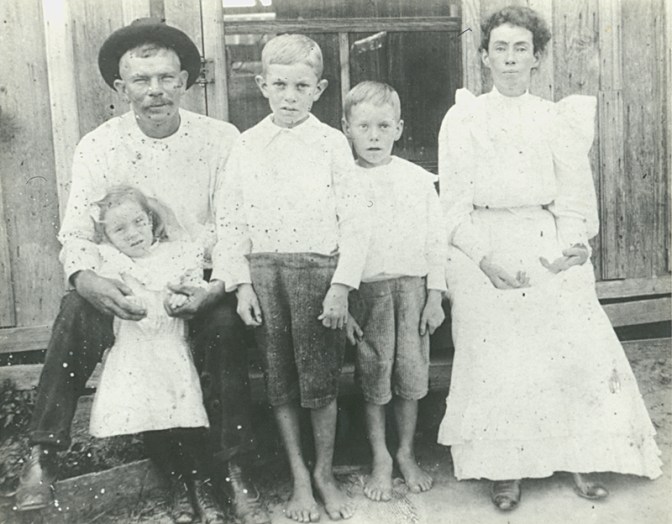
Ruckins got a good laugh out of my archaic language and changed the subject by asking me if liked airplanes. I wholeheartedly said yes and rushed into my story from a few days prior where my Dad and I flew with Mr. Jackson in his Cessna. Mr. McKneely went on to explain that he was working at the service station a few days a week while also working out at the Patterson Airport as an airplane mechanic with Mr. Jimmy Wedell and Mr. Harry P. Wiliams, who were building airplanes to race other planes.
I gave him my own quizzical look and started to say something about Wedell and Williams being dead for decades but McKneely had barely taken a breath when he rushed into another story about an old beat up Harley motorcycle that he had purchased and was working on it so he could move to California.
“I’m going to head west on my motorcycle one of these days and get me a job as an airplane mechanic on the Pacific Ocean,” McKneely proclaimed.
The mechanic said he had to get back to work and appeared to walk through a bench of tools and fittings, dissipating into the cramped air just as my Dad came out of the filling station with the keys to his car.
“What are you staring at bud?”
“The mechanic, the one with the funny coveralls and the motorcycle,” I said.
“Mr. Rentrop just has the one mechanic and he’s back inside. Don’t go daydreaming on me again.” Dad said as he walked to the car.
Looking around, the man who said he was Ruckins McKneely was nowhere in sight and my head was spinning at what surely had been my imagination. Once again, that is.
Note From the Author
I probably didn’t fully appreciate how historical my little town was when I was a kid but honestly, what kid really does try to dig deep into the roots of where they grew up? I learned more about the past events of Patterson as an adult, long after I grew up and moved away. The internet and online research has only further ignited my desire to learn and discover more about the home of rugged lumberjacks, aviation pioneers, entrepreneurs, steamboat men, shrimpers, trappers, and everyone in between.
Harry P. Williams and James R. Wedel formed one of the most productive alliances in aviation during the 1930’s. Their company, the Wedell-Williams Air Service Corporation left a remarkable legacy to the world of air racing and the state of Louisiana, all of which began in my hometown of Patterson. Ruckins McKneely eventually loaded up his Harley and left his hometown of Patterson and connected with Amelia Earhart and became her main mechanic. To learn more about this remarkable team, their impact on our country’s aviation history, their relationships with famous aviators like Amelia Earhart, Jimmy Doolittle, Roscoe Turner and others, I highly recommend the book “Wedell-Williams Air Service“ by Robert S. Hirsch and Barbara H. Schultz.
Most of all, go to Patterson and visit the Wedell-Williams Aviation and Cypress Mill Museum to learn firsthand how Patterson and its citizens played a vital role in the cypress and aviation industries of our country.


Love the story !
LikeLiked by 1 person
Enjoyed the short story and the history, well done.
LikeLiked by 1 person
Thank you Charles for reading and for the nice comment.
LikeLike
Thank you Joe R. for sharing and thank you Steve for the trip back to our home town. Great job.
LikeLike
I return from time to time and read, or reread, your stories. It is nice to return to Patterson when there is time. These stories, in their own way, bring me back to those wonderful years.
Wishing you well.
LikeLike
Love, love, love your stories.
Very well written. Throughly enjoyed transporting myself back to Patterson through your story.
LikeLike
Wow Steve, cannot tell you how much enjoyed this story! The Patterson Airport was my home and you just brought back fond memories . Thanks!
LikeLike
Susan, so happy you enjoyed this story.
LikeLike
I enjoyed your memories very much. Ruckins McKneely , Amelia’s mechanic was my uncle. Thanks for keeping his family memory alive. His father, Ruckins McKneely, was the skidder camp superintendent, and captain of the Sewanee. The Sewanee hauled cargo as far as Pennsylvania, but mostly as far as Cairo, IL.
LikeLiked by 1 person
Thank you for reading and for sending me a note. I love the info about the Sewanee and the distance she traveled. I’ll keep looking for more history about this culturally rich area we call South Louisiana. Thanks again.
LikeLike