I was nervous as I walked into the ‘new’ high school in Patterson, La. It was the fall of 1978, and I was embarking on my first year at Patterson High School. For eight years I walked to school, starting in first grade at Hattie Watts Elementary through eighth grade at Patterson Junior High. So, for the first time, I rode a bus to school which was both exciting and interesting as I had no idea who all would be on the same bus route as me. I use the term ‘new’ high school because grades 9-12 in my small south Louisiana town had only been in the new building for two years. Also, for the first time, I would be learning in a school that had air conditioning.
I was a scrawny kid, barely weighing a hundred pounds in my first year in high school. I was intimidated by the older, bigger, smarter kids who shared the hallways and classrooms with me. Opening the main doors as I entered the school, the first thing I saw was the principal’s office, or rather the head office where the secretaries and principals had offices and administrative areas needed to run the high school. Standing in the hallway outside the offices was the principal of the high school, Mr. Ernest McMurray. He had a reputation of being a strict disciplinarian, with the expectation every student was in school to learn, not play. Plus, he knew my dad and I was confident Mr. McMurray would not hesitate to call my dad if I got into trouble. I avoided eye contact and quickly found my locker before the opening school bell rang.
My nerves soon settled. I quickly adjusted to high school life, matured, learned a great deal, and can say, without a doubt, my four years in high school were some of the best years of my life. I made life-long friends, had great experiences both academically and socially, enjoyed sports and school organizations and became a better person based on all my experiences in the four years of high school. But decades later, when reflecting on those days, I realized I did not fully appreciate and understand what made my experiences so productive and meaningful. I know it is not just one thing because the influences on my life and the lives of my classmates came from living in a small town, positive role models, attentive parents, church, and a variety of occurrences that shaped each of us.
But a deeper reflection led me to think about how good I had it while receiving my education at Patterson High School. I learned in a safe and clean environment. I had excellent teachers. Except for the occasional disagreement that happens in school, everyone got along and issues of social status, race, economics, or religion that plagued other places, did not affect me and other students. That is not to say things were perfect, not at all. But thankfully, high school was a wonderful experience. It was not just happenstance that created this positive environment. Just maybe, the man who I saw standing outside the school offices on that first day of high school was more than just a man who made sure students behaved and got along. While thinking about those four years between 1978 and 1982, there was a lot I didn’t know about Ernest McMurray, not just the principal, the educator, the husband, the father, but the man who had been a positive role model for thousands of students just like me.

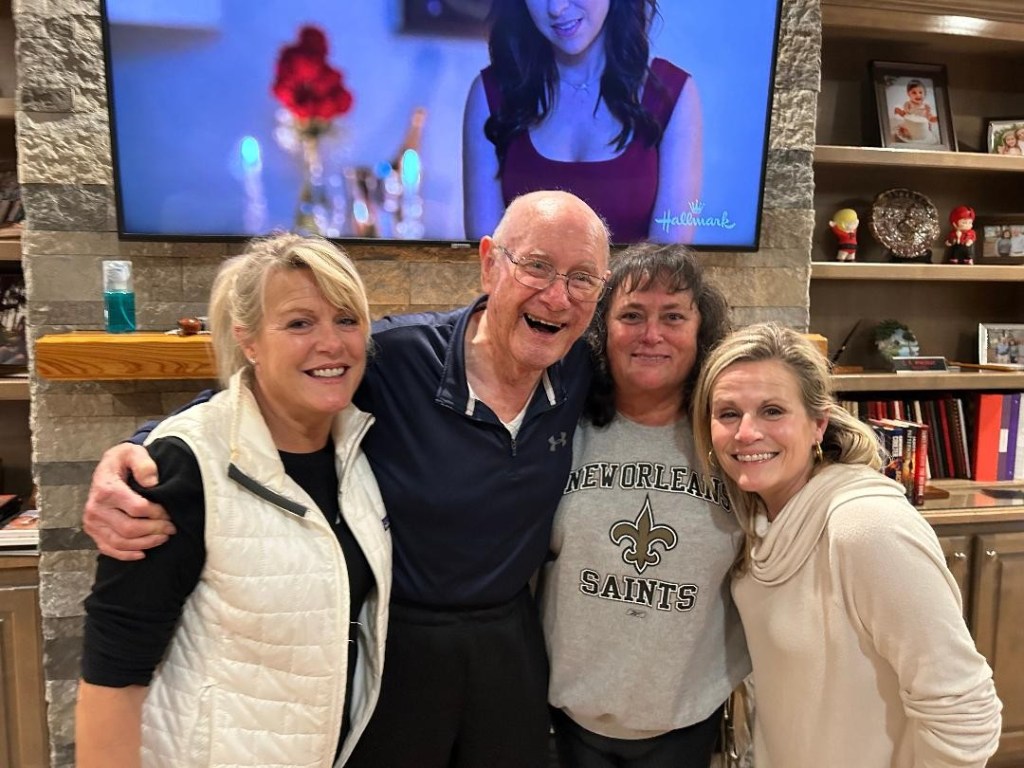
I sat down with (Mr. Mac), as he is affectionately known to so many, one beautiful afternoon this past spring. He spends his retirement years living in an incredible house that is partially on land and partially suspended over the Lower Atchafalaya River in the same town where he first became a principal, in Patterson. The hours talking, recalling former classmates, teachers, events, high school sports, and a lot more, were one of the more meaningful afternoons of my adult life. But to fully understand Mr. Mac, we need to go back to when Mr. McMurray was in the first grade.
Mr. Mac describes life growing up amongst cotton fields outside of Winnsboro, LA. He tells me, starting in first grade, he had to walk a mile just to get to the stop to catch the bus that would take him to school. So, to get to school, he walked down a dusty, dirt road that cut through acres and acres of crops and livestock outside his north Louisiana hometown. While listening to Mr. Mac tell me about the early years of his life, I could not help but imagine the thousands and thousands of tiny footsteps he took as he made the two-mile roundtrip journey each day. Even then, education was important to him, so he walked without complaint to the school and home each day.
The 1930’s saw most of the country suffering through the Great Depression. It was especially tough in the rural areas of the deep south where families had to raise everything they ate. Everyone in the family contributed to herding livestock, milking cows, picking cotton, and harvesting vegetables. Age was not a factor. Everyone contributed and worked, even boys as young as six. Between daily chores, kids had to find time to study and complete their school assignments. Mr. Mac didn’t know it then, but education would consume his life and that would also have an overwhelmingly positive influence on thousands of school-age kids in his lifetime.
“I was born on a farm that belonged to my mother’s parents. When I was about 4 years old, my parents bought an 80-acre farm across the road from my grandparents,” Ernest McMurray says as he reflects on the early, formative years of his life.
Adjusting to working on the family farm, McMurray also had to adapt to a lot of moving and attending new schools. Between the third and fourth grade, his dad got a job with a seismograph company looking for oil deposits. Although the job brought more financial stability, the cost came in the number of times the McMurray family had to move.
Counting the moves and the number of schools he attended, McMurray recalled, “I went to schools in Louisiana, Mississippi, Georgia, Florida, and Texas. I went to a total of thirteen different schools, including multiple return trips to Winnsboro. I went to school in Milton, Florida the first half of my senior year and then attended and graduated from Winnsboro High School the second half of my senior year in 1953.”
After high school, he enrolled at Louisiana Tech in Ruston, LA. He graduated in May 1957 with a double major in English and Social Studies. Less than a month after graduating, he married Elizabeth Ann Dosher, whom he had known for several years and had dated for a year.
Ann’s father was a salesman for the Singer Sewing Machine Company. Ann’s mother was a housewife who was raised in Fort Necessity, LA. Her father died of a massive heart attack when she was in the third grade. Ann had one older brother who later became an agriculture teacher. Several years after her father’s death, her mother remarried. The gentleman she married was a former classmate from Fort Necessity and was a second cousin to Ernest.
Ernest and Ann had been friends since the time she moved to Fort Necessity, after her mom remarried. Ann was also the best friend with one of Ernest’s first cousins.
Mr. Mac recalls, between my junior and senior year of college, in the summer of 1956, I attended a dance at Ann’s first cousins house and Ann was at the dance. We danced quite a lot of dances that night and I asked her on a date. From there, we started going together and became engaged at Christmas. A year and a week after that date, we got married on June 22, 1957.
“I joined the United States Marine Corps in 1957 to become a pilot. While going through Officer’s Candidate School (OCS) at Quantico, VA, I developed shin splints from running on blacktop to the point where I could hardly walk, much less run, which we were required to do. Since I could not do the things that were required to do in OCS, I was reduced to an enlisted Marine and sent to boot camp at Paris Island in South Carolina.”
Following basic training, McMurray was sent back to Quantico to serve on mess duty while waiting to go to Lebanon. During this time, his military specialty changed from infantry to administration. The Marines sent him to the Air Station at Quantico where he was given the title of Service Record Book Clerk and Prison Chaser. He stayed in that unit until he was discharged in September 1959.
Ann was teaching in Vinton, LA while Mr. McMurray looked for work in the chemical plants around Lake Charles, La and Orange, Texas. They would not hire him because they felt he had too much education for that type of blue-collar work. So, he went back to Louisiana Tech to complete a certification to teach. He needed fifteen credit hours plus student teaching, which he completed in the spring of 1960. Once again, finding a job, although in another field, was not an easy task for the young teacher.
“I could not get a job in Calcasieu Parish where Ann was teaching so I applied in other parishes but was only offered a job in St. Mary Parish.”
McMurray was hired to teach Social Studies and Ann was hired to teach third grade at Patterson High School (PHS) in the fall of 1960. At the time PHS was first through 12th grade. Teaching Social Studies in the high school meant he was the entire Social Studies department, responsible for American History, World History, Civics and World Geography. He maintained this schedule for 7 years until the school year 1967-1968, when he was asked to serve as principal of Julia B. Maitland Elementary in Morgan City, grades 1-8.
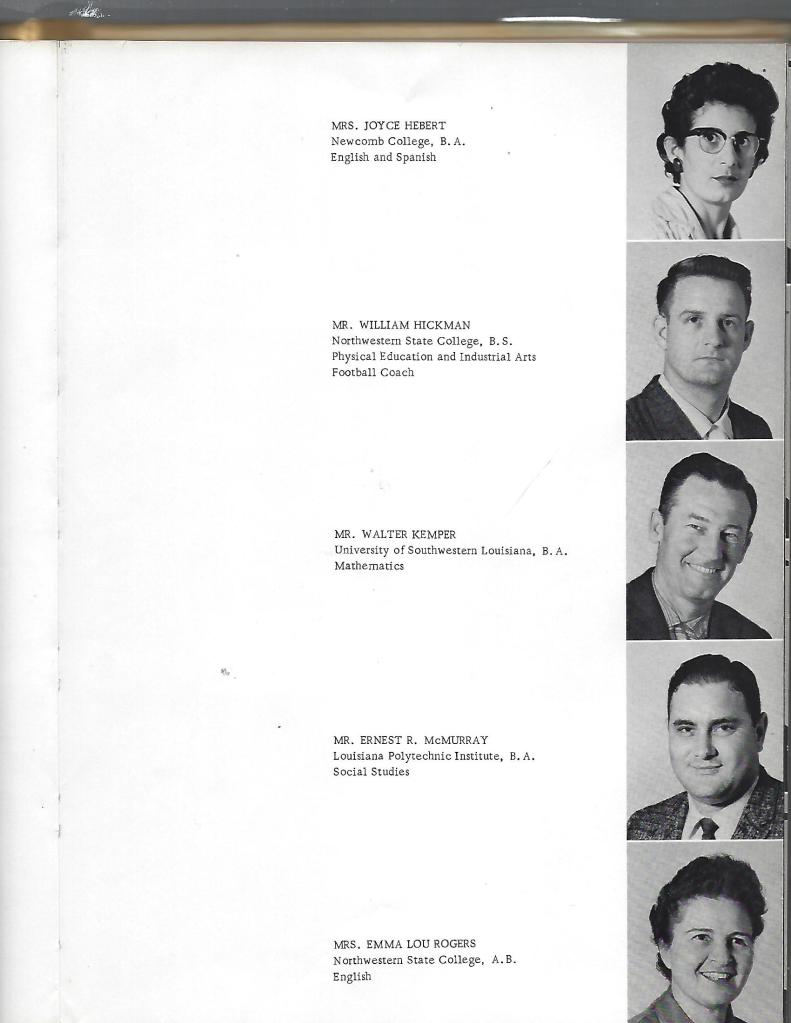

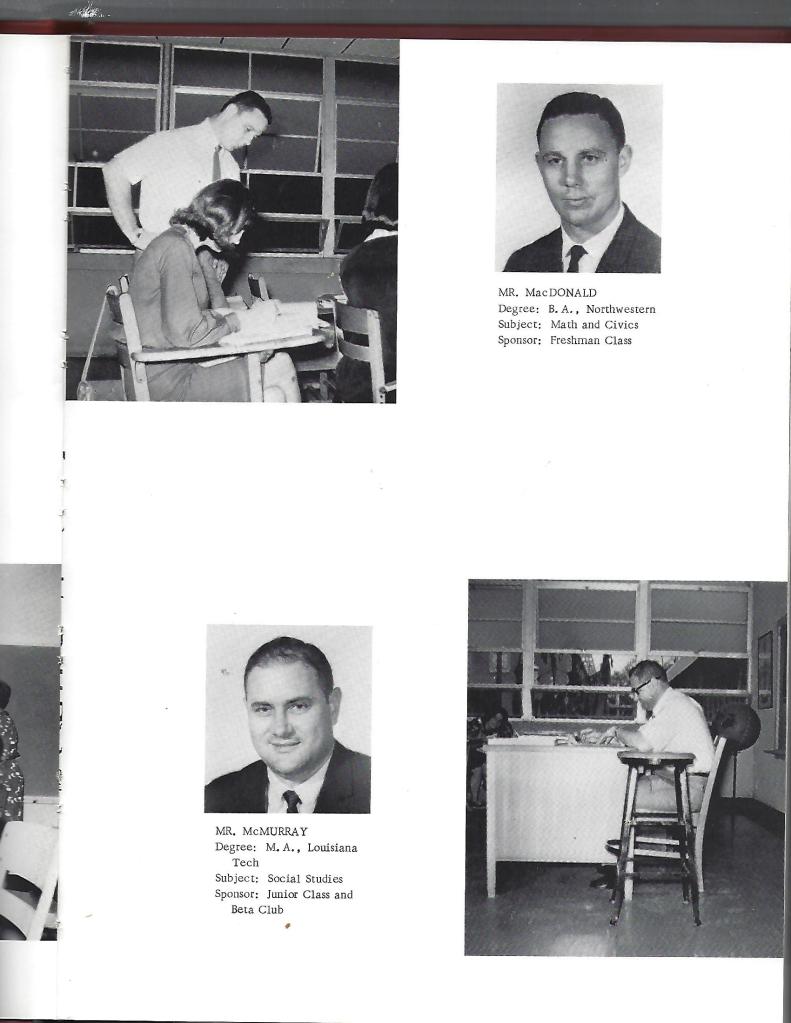
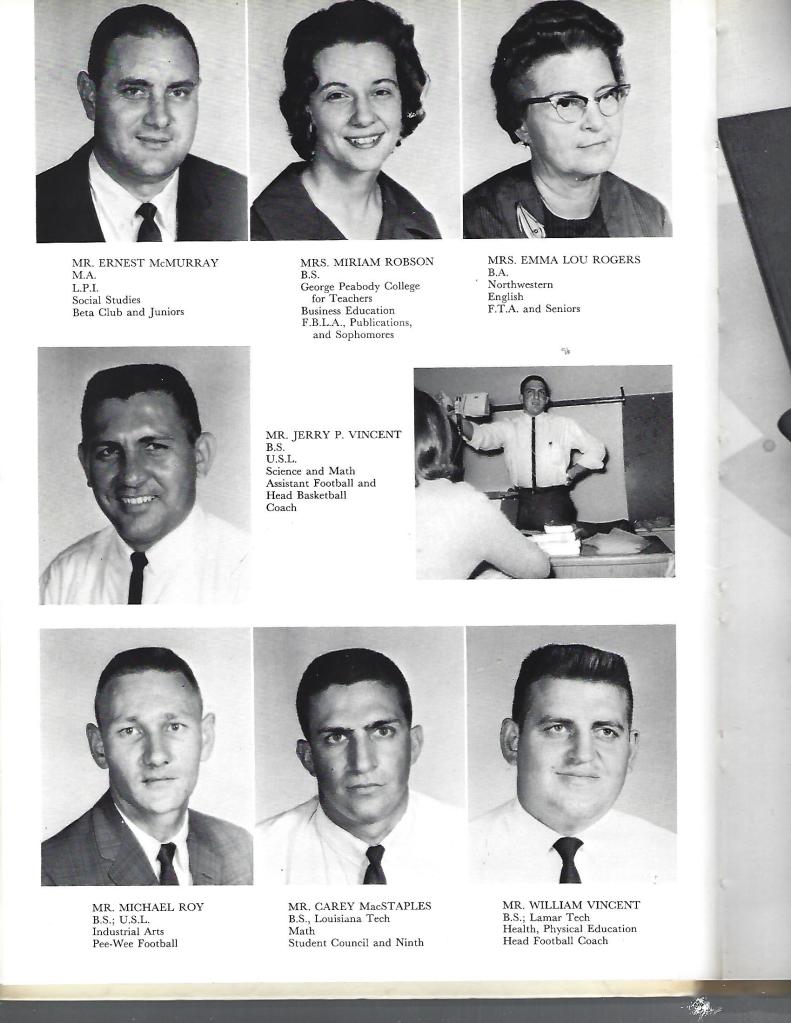
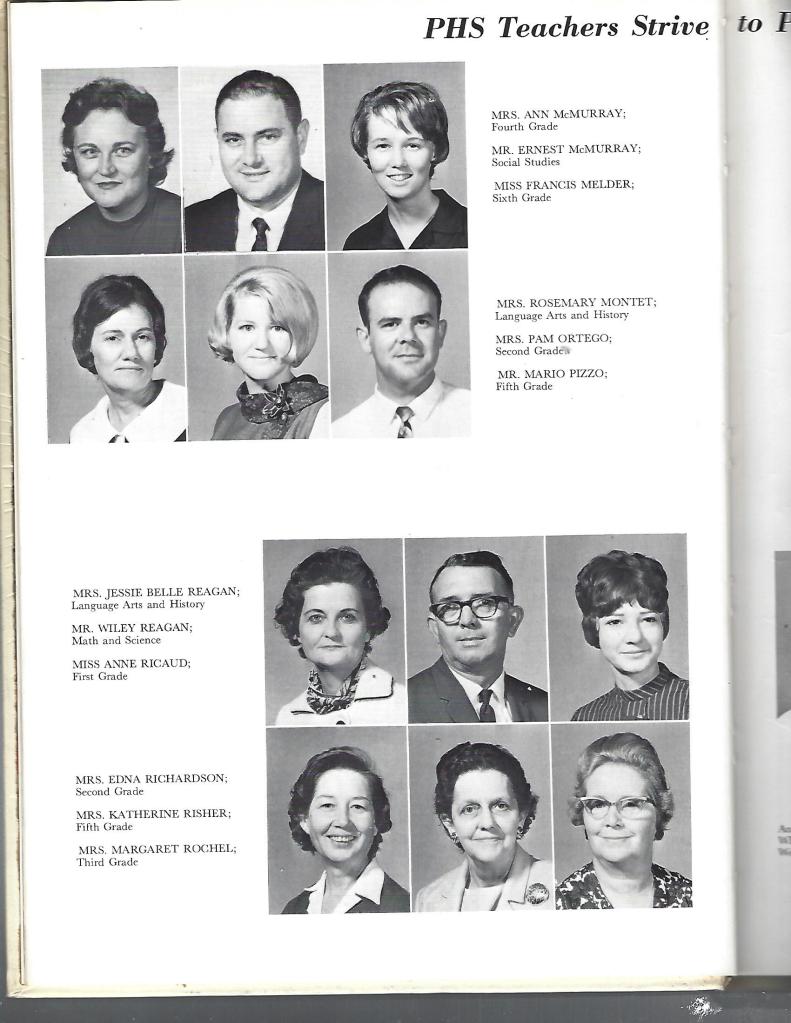
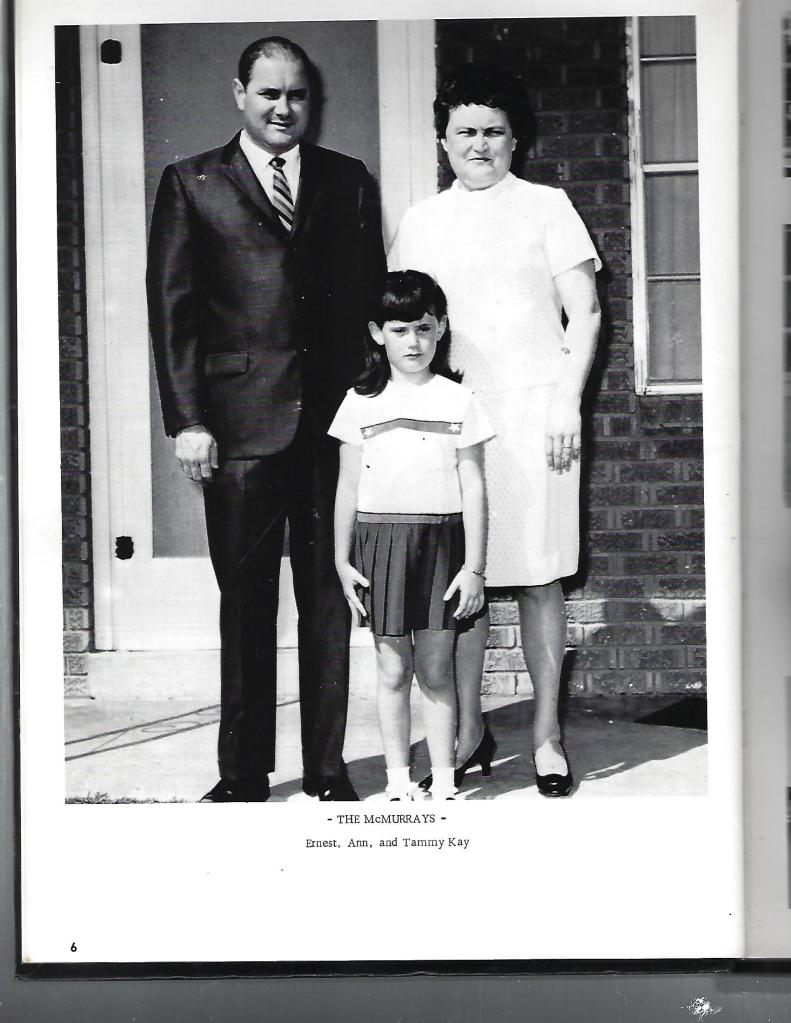
In 1968, McMurray transferred back to PHS as principal of grades 1-12. That year, the school’s total enrollment was 1,239 students. In the summer of 1969, the schools in St. Mary Parish were integrated. Patterson High School served grades 4th through 12th and the former all-Black school, Hattie Watts, became a first through third grade elementary school.
Although other school districts across the country experienced major upheaval due to integration, Mr. Mac says Patterson High School went through integration with very few problems.
“I was a strong disciplinarian. Because of my background in the Marines and the influence my parents had on me, I was accused of running a Marine Corps boot camp at the high school. My answer was that it worked,” Mr. McMurray shares as he thinks back on those times.
In 1976, Patterson High opened in a new building and in a new location. McMurray would continue as principal there until his retirement in 1988.
In his own reflections, Mr. Mac says, “I had a great marriage with Ann. She was my support and confidante for all those years.”
Ann supported me in my teaching and school activities, like being a class and Beta Club sponsor, Mr. Mac said. After becoming principal, she strongly supported me and the activities the school participated in.
“Ann and I attended everything together. After Tammy was born, the three of us attended all activities together,” he said.
Ann retired in 1986 and passed away on June 5, 2014. “I miss her greatly,” Mr. Mac said.
“My greatest joy was to see my students go forth and have great careers. My first year of teaching, I was a senior sponsor. Still to this day, I keep up with a lot of those students. Many former students still live in the Patterson area,” he says. “I am friends with some of those students, and I keep up with and visit many of them. There are three or four I visit and stay with them when I am in their area.”

How does someone become a good principal? How do you transition from being a teacher to a principal and be successful in that role, I asked. “In the seven years that I taught I had two different principals. I had good examples of what not to do when I became principal, he responded.”
Another avenue to creating the best educational environment is to pick teachers very carefully, he says. “I kept only the very best. We had some of the best teachers in St. Mary Parish. Our graduates earned the Petroleum Club Scholarship (sponsored by the American Petroleum Institute) about every year. I expected teachers to teach kids.”
But McMurray also encouraged his teachers to continue their own education, prompting them to get their master’s degrees. When you work with the number of teachers that he worked with over the years, it is difficult to list the names of so many outstanding teachers. McMurray is cautious, not wanting to leave anyone out but does mention teachers Diane Calamari, Joanne Landry, Mary Martien, Carey Mac Staples, Emma Lou Rogers as examples of good teachers he was grateful to have on his team.
McMurray not only encouraged teachers to continue their education, but he also hired former students and mentored them, sharing his knowledge and experience creating the next generation of educators.
“Mr. Mac hired me right out of college as a special education teacher,” said Lenny Armato, the former Superintendent of the St. Mary Parish School System. “He set the tone for all of us who worked for him, and we followed his trademark on how to run a school.”
Armato, a 1981 graduate of Patterson High School, spent 33 years in the St. Mary Parish School System as a teacher, special education supervisor, and as a principal, at Hattie Watts Elementary. From day one as an educator, Armato said that McMurray was right there, advising and mentoring him. “I would go to Mr. Mac and run things by him, asking how he would manage a particular situation. Always, Mr. McMurray would be straight with me, giving me his opinion, not afraid to share the good, the bad and the ugly.”
As a student and as a teacher, Armato says everyone knew that Mr. Mac was a good disciplinarian. Armato goes on to say there were students who got in trouble, acted up in school and Mr. Mac was on them right away. “He was firm, but he was always fair. There are a lot of students who have said that if it had not been for Mr. McMurray, they would have never finished high school.”
“As a student, you could hear Mr. Mac coming down the hallway, recognizing the sound of his boots hitting the tiles,” Armato laughs as he thinks about his four years in high school. Armato’s voice takes on a serious tone when he says, “Mr. Mac could walk down the hallway in school and he knew which teachers were teaching, and which ones weren’t teaching.”
Armato concluded by saying, “To this day, Mr. Mac will help anyone if he can. I was lucky to have him in my life.”
Paul Shivers said he once received a two-week vacation from Mr. McMurray. The 1977 graduate got in trouble and was sent to the principal’s office. After Mr. Mac broke down the violation and the punishment for Shivers, the principal said, “you are now going on vacation. Who do you want to call, your mom or your dad?” Knowing his mom would be more upset than his dad, he told Mr. Mac to call his dad to pick him up. Paul’s vacation was two weeks of extremely demanding work in the hot sun for his dad.
Of course, Paul Shivers was upset with the situation as a student, but upon reflection years later, he was quick to say, “Mr. Mac was strict, firm but always fair. He lived and breathed the high school and the town. Patterson High School was fortunate to have Mr. McMurray as its principal.”
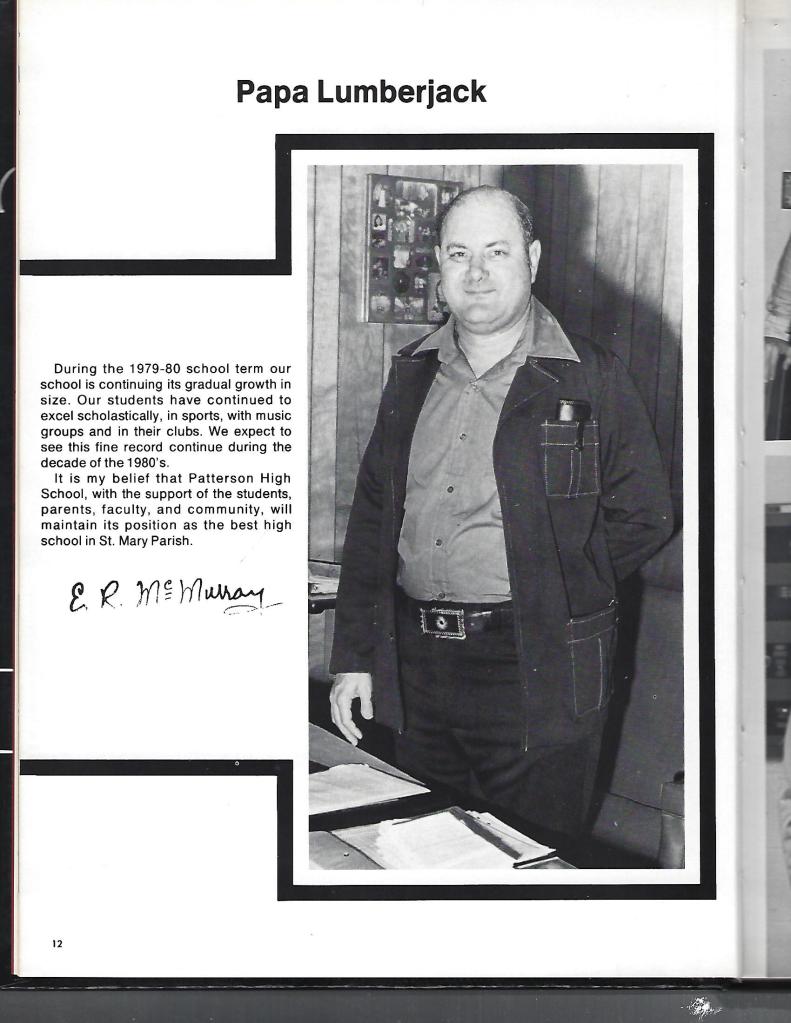
An excerpt from the 1979-1980 yearbook reflects McMurray’s strong commitment to the school and students. He wrote, “During this school term our school is continuing its gradual growth in size. Our students have continued to excel scholastically, and in sports, with music groups and in their clubs. We expect to see this fine record continue during the decade of the 1980’s.”
He continued, “It is my belief that Patterson high School, with the support of the students, parents, faculty, and community, will maintain its position as the best high school in St. Mary Parish.”
In the years McMurray was a principal, the United States faced a variety of challenges, including the integration of schools, the Vietnam War, anti-war protests, gas shortages, high interest rates, just to name a few. Regarding the integration of Black and White students together in 1969, he recalls only one major fight that was racial in nature. “As a principal you have good kids and some bad kids and some in between. My philosophy has always been, if you are not here for an education, you can go somewhere else.”
There were times when money was very tight and tough decisions had to be made about allocating money for sports equipment, school supplies, and upgrading facilities. One challenge he faced in his first year as the principal at Patterson High was providing uniforms and equipment for the sports programs. Previous leaders had run up debts with local businesses, and the school did not have a good financial reputation in the community. Mr. Mac humbly visited each of the businesses that were owed money by the school and put his own reputation on the line, asking for funding for that year’s sports programs and giving his word that the school’s debts would be paid by the end of the year. That promise was fulfilled by the end of that school term.
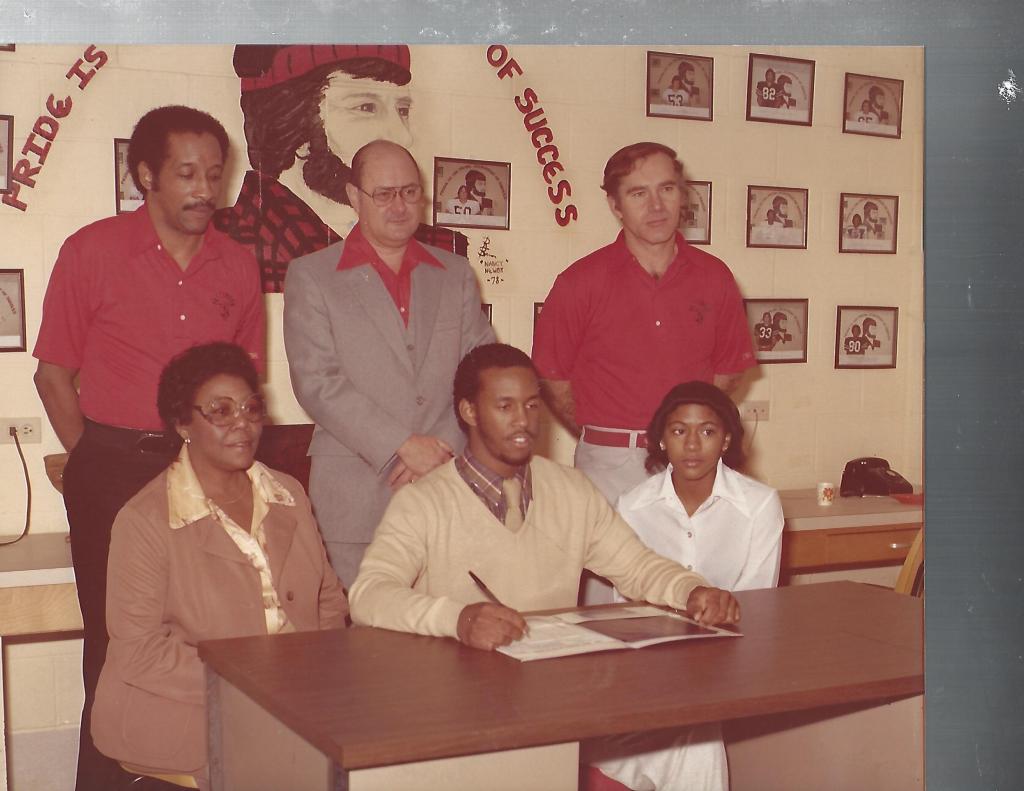
“I supported the clubs as it was especially important for kids to be involved in extra-curricular activities. I also supported our sports programs, but you had to pass to play sports. I checked the grades of every athlete every six weeks to make sure they were qualified to play,” he said.
“The St. Mary Parish Police Jury, especially Emory Jennings and Frank Guarisco, did so much for our high school, and our baseball and football fields. Outside help for athletics was always appreciated, but as the high school principal, McMurray expected each program to be self-supportive. One of the most difficult sports to provide its own support, was track and field. McMurray may have been tough, but he was also sympathetic when he allowed profits generated from soda and vending machines to go to the track team.
When asked about hobbies and life beyond his role as an educator and principal, Mr. Mac said he did not have a hobby other than raising a garden. “Being a high school principal was a full-time job.” But I am reminded that he was also a full-time husband to Ann and a full-time dad to Tammy. “I am immensely proud of my daughter, Tammy, and what she has made of her life. She does an excellent job of looking after me now that I have gotten old.
The positive impact a good leader may have on someone’s life may not manifest itself until years later. A principal of a high school in a small south Louisiana community fills a variety of roles, many of which are not found in a policy manual or a job description. Yes, teenagers need guidance, direction and sometimes discipline, but those unspoken roles where a principal speaks with a student as a father would, can often produce far better results than say a punishment often given for minor issues.
Susie Lambert Meserole, shared a story from the fall of 1987 when her senior year did not get off to the best start and she had to deal with a disappointing event. “In the mind of a 17-year-old girl it was tragic but looking back on it, it was simply a rite of passage, a life lesson to learn,” Meserole said.
However, details of this event found their way to the principal’s office, and she was summoned to see Mr. McMurray. Walking in on shaky legs, Meserole sat down across the desk from McMurray, not sure what to expect and what the fallout might be related to the situation.
Meserole recalls Mr. McMurray telling her he was aware of the event that happened, and it wasn’t right, but it was done and over with now. But it was his next eleven words that would resonate with her through the coming weekend that year and through the rest of her life.
Mr. Mac told her, “Hold your head high and focus on the task at hand.”
“It was the fatherly advice he knew I needed to hear in that moment. I heard those words as I walked into my first job interview, in tense client meetings, as I faced a concerning doctor’s appointment, when I dropped kids off at college too many hours from home and every other moment of uncertainty since that day in Mr. McMurray’s office at PHS,” she proudly says.
With honest conviction and with love, Meserole concludes, “Mr. Mac will always be more than a high school principal to me. He was the father I needed that morning as my own father had passed away just months prior. He was the authority figure we all needed as we made our way through high school in preparation for the real world. He was an example of true leadership. He will always be my favorite memory of that season of life and to this day, my favorite person to see when I visit P’town. He is a true PHS treasure.”


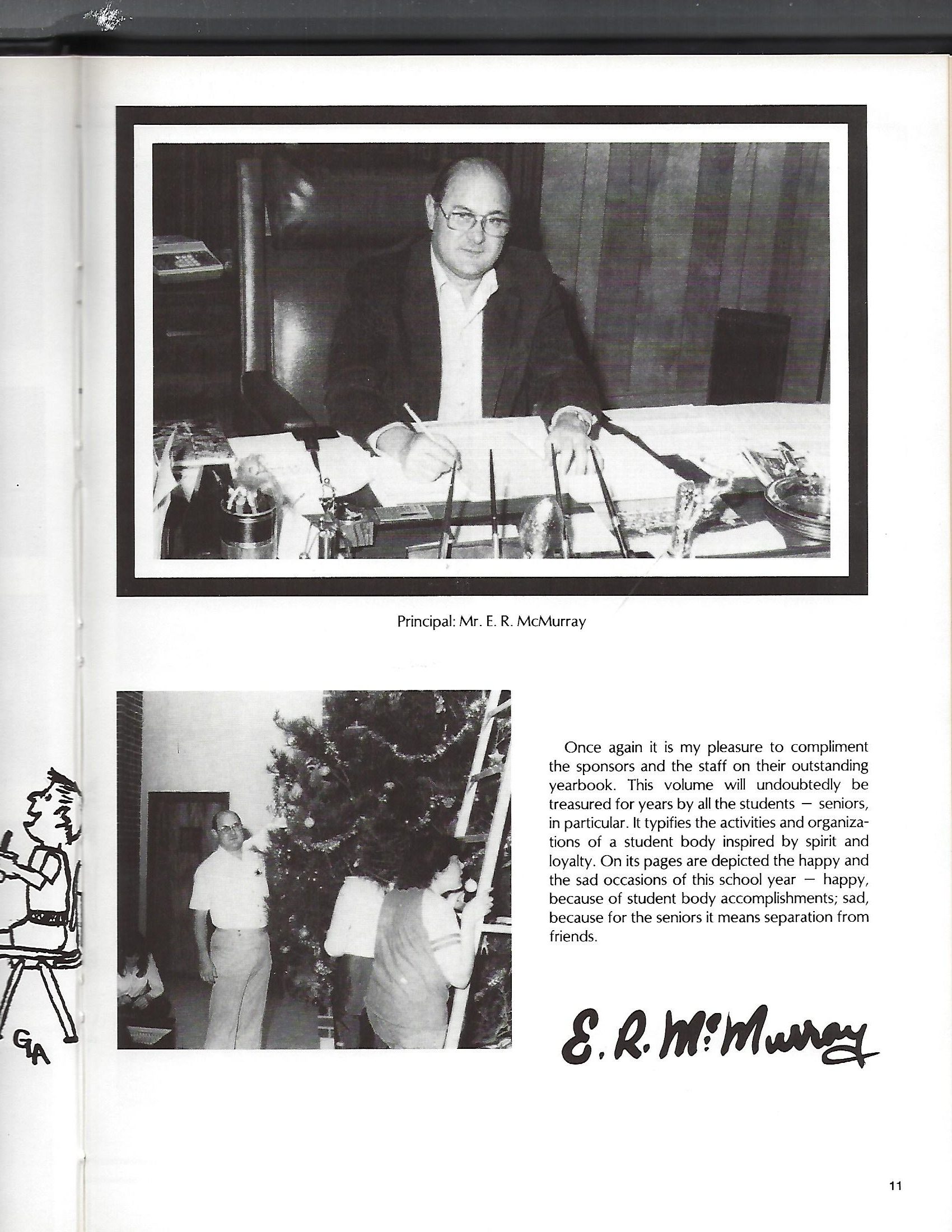
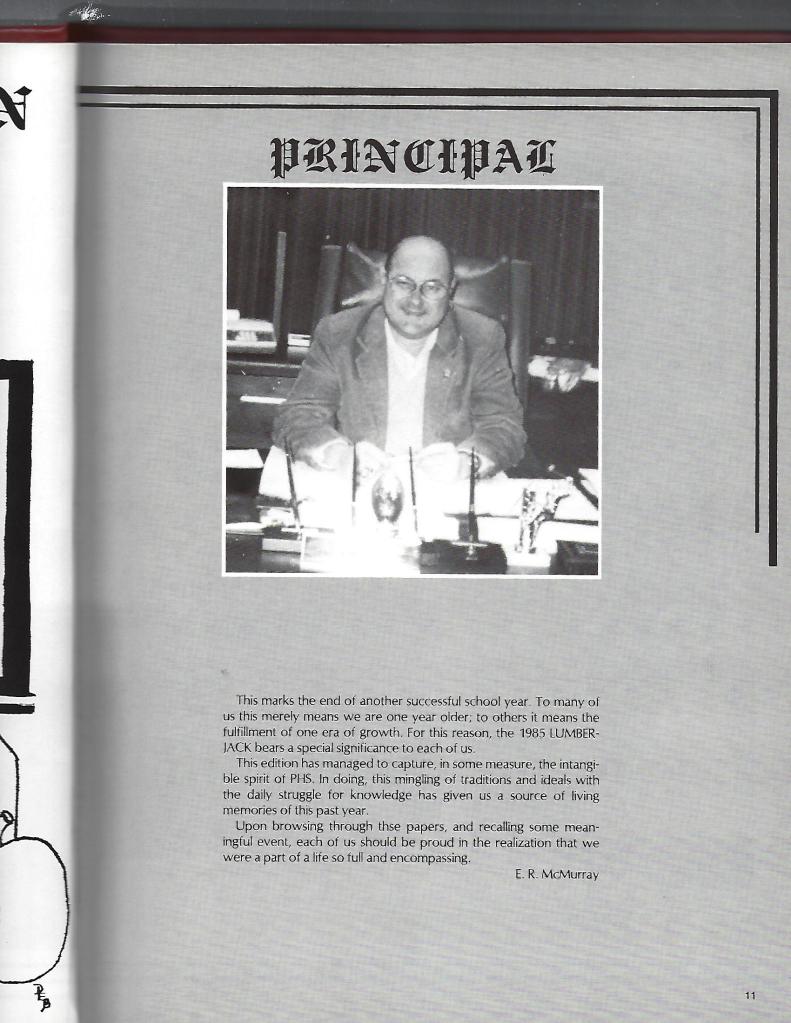
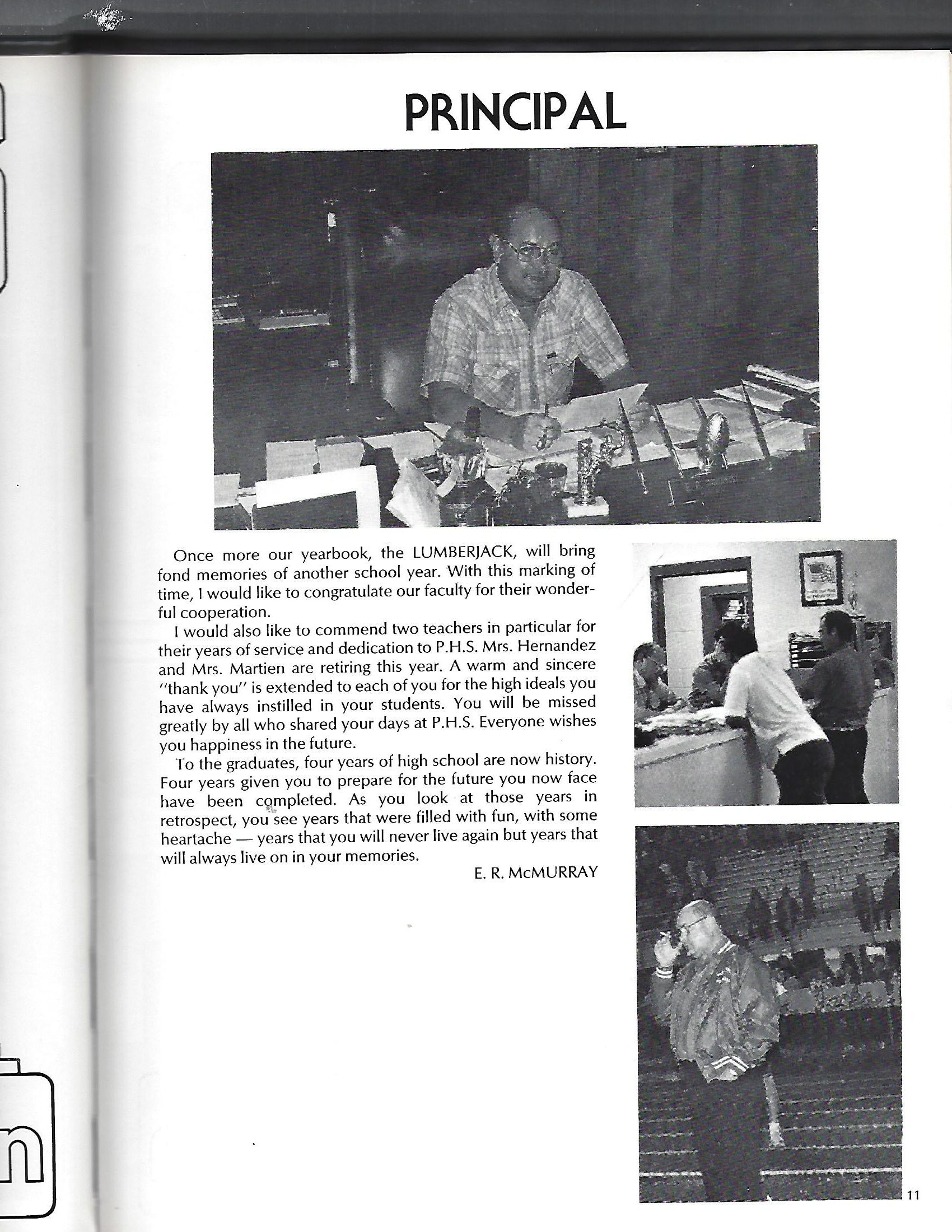
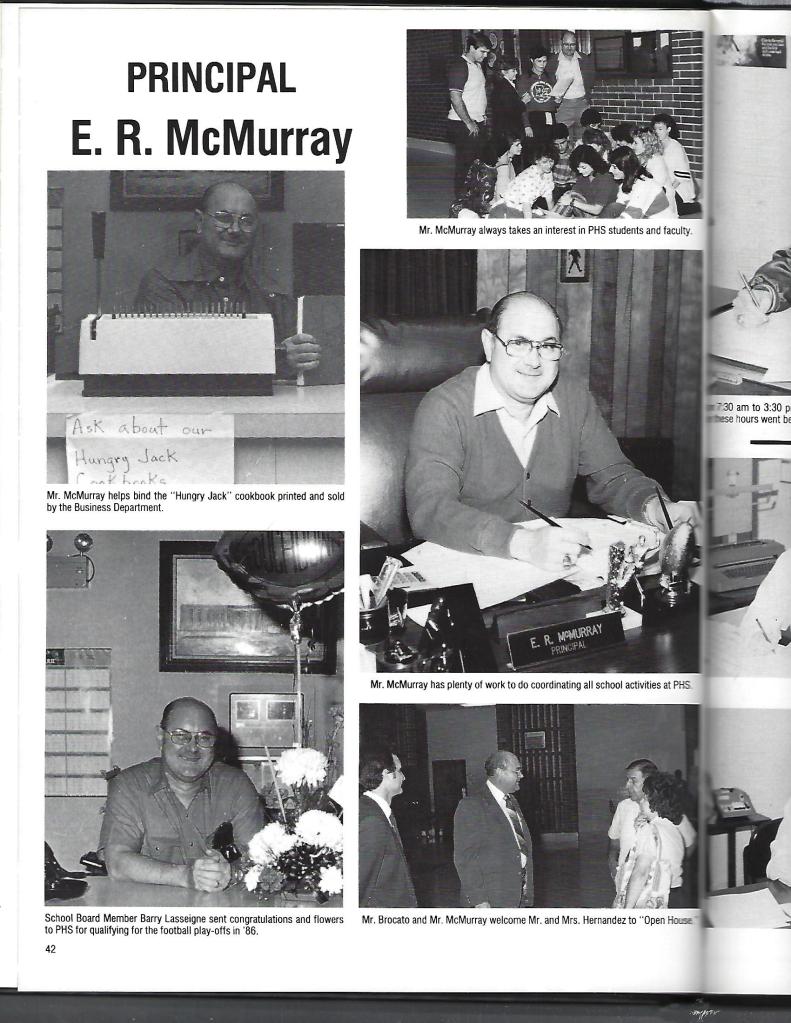
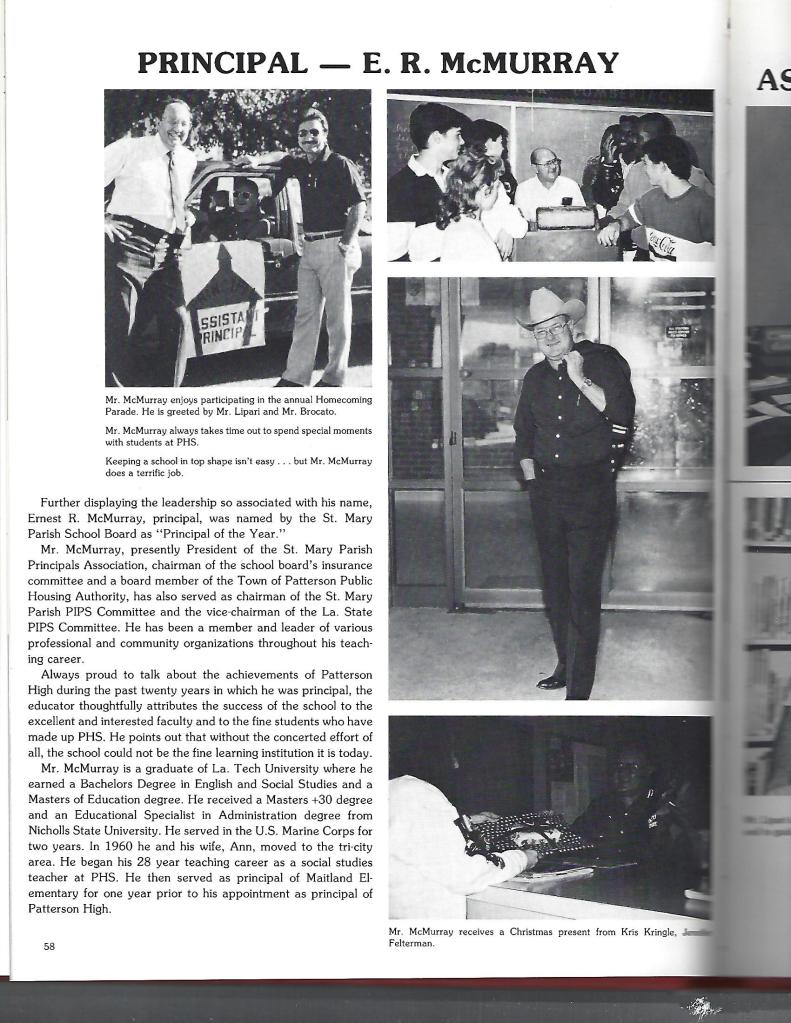
Other students had comparable stories to share about their principal.
“Mr. Mac was indeed a well-known pillar in our community. He touched many lives during his tenure as our high school principal. I recall adults in my family and around town talking about his organization, discipline and what a key role model he was. I remember his no-nonsense approach and how he wanted things done the right way. As student council president I experienced his leadership firsthand. He made sure we had our events well planned before he would approve them. He asked questions and challenged us,” said David Allelo, who graduated from Patterson High School in 1979, and the same year was chosen as Mr. PHS.
“I remember how much he was respected and appreciated. I recall visiting a neighboring high school, built at the same time from the same plans as our school, and walking away very proud of how much better our building had been maintained, a testament to how much Mr. Mac cared and managed things,” Allelo added.
“Over the years I’ve had a chance to visit Mr. Mac and his daughter Tammy. He had a strong interest in what I had been doing and was always supportive and encouraging. We are both Louisiana Tech alum and he often shares stories of his days at Tech.”
Allelo concluded, “Mr. Mac is as loyal to Patterson and the Lumberjacks as anyone I have ever known. He proudly sports his red and black and still attends as many events as possible. I have been truly inspired by Mr. Mac’s leadership and example.”
When speaking to former students about Mr. McMurray, a consistent theme of attributes emerged. Often repeated in my interview I heard: Mr. Mac was fair, always had high expectations, loyal, respected, supportive, to name a few.
Robin Sykes, a 1980 Patterson High graduate, was in the first graduating class to have attended all four grades at the new high school. In sharing her thoughts and memories of Mr. McMurray, Sykes articulated what others had said and felt about the former PHS principal. I love her heart-felt commentary about the man who made such a positive impact on her life and so many other lives. Robin Sykes said:
Mr. Mac was fair. I had a teacher in 9th or 10th grade who asked me to do a second in-class report because I had finished mine quickly. We were all in the library, and I was reading a book when the teacher approached me with his demand. He threatened to send me to the principal’s office if I did not comply, and I told him I was happy to go. I went to Mr. Mac’s office and pleaded my case. Mr. Mac agreed with me and told the teacher that it was not necessary for me to do double the work because I completed mine early. Other principals may have told me that I had to do what the teacher demanded, but Mr. Mac listened to me. Unbiased and fair, he helped me to see that I was respected as a teenager. I have never forgotten that.
Mr. Mac is loyal. I have maintained a relationship with the McMurray family for the last 50 years. I have watched Mr. Mac as he lost the love of his life, Ms. Ann, in 2014 and I have been inspired by his continued love for her. Having lost my own dad years ago, I have felt a little jealous when he tells me how much he loves his only child, Tammy, and how proud he is of her, her husband, his grandchildren, and his great grandchildren. And I am amazed that he still drives his motor home around the country by himself at 90 years of age!
Mr. Mac bleeds red and black. When I visit with the family now, one of his favorite things to do is to reminisce about those years that he was principal at PHS. He has shown me all his Patterson yearbooks that he proudly displays on a shelf in his house and still recalls so many students and their antics.
Mr. Mac retired as principal of PHS in 1988. All his years as a teacher, as well as those spent serving our country as a Marine, shaped him into the finest high school principal ever. (In my humble opinion) He is a treasure to all of us who were lucky enough to attend a school that was led by such a strong man of character, our Papa Lumberjack
Going back to the afternoon last spring when I sat down with Mr. McMurray, I left Patterson with dozens of memories swirling around in my head. When I think back on my days in high school, I can see Mr. McMurray at football games, walking in the hallways of PHS, announcing the start of a pep rally and without fail, I always see him wearing a red shirt and black pants, our school colors. His leadership helped students prepare for the future, giving each of us a wonderful opportunity to find our own place in the world.
Mr. Mac’s words echo in my mind. “I guess I did pretty good for an old farm boy from the cotton fields of North Louisiana.”
Yes, Mr. Mac, you surely did. You also helped many, many students do pretty good for themselves as well.

 Pinball & Preachers